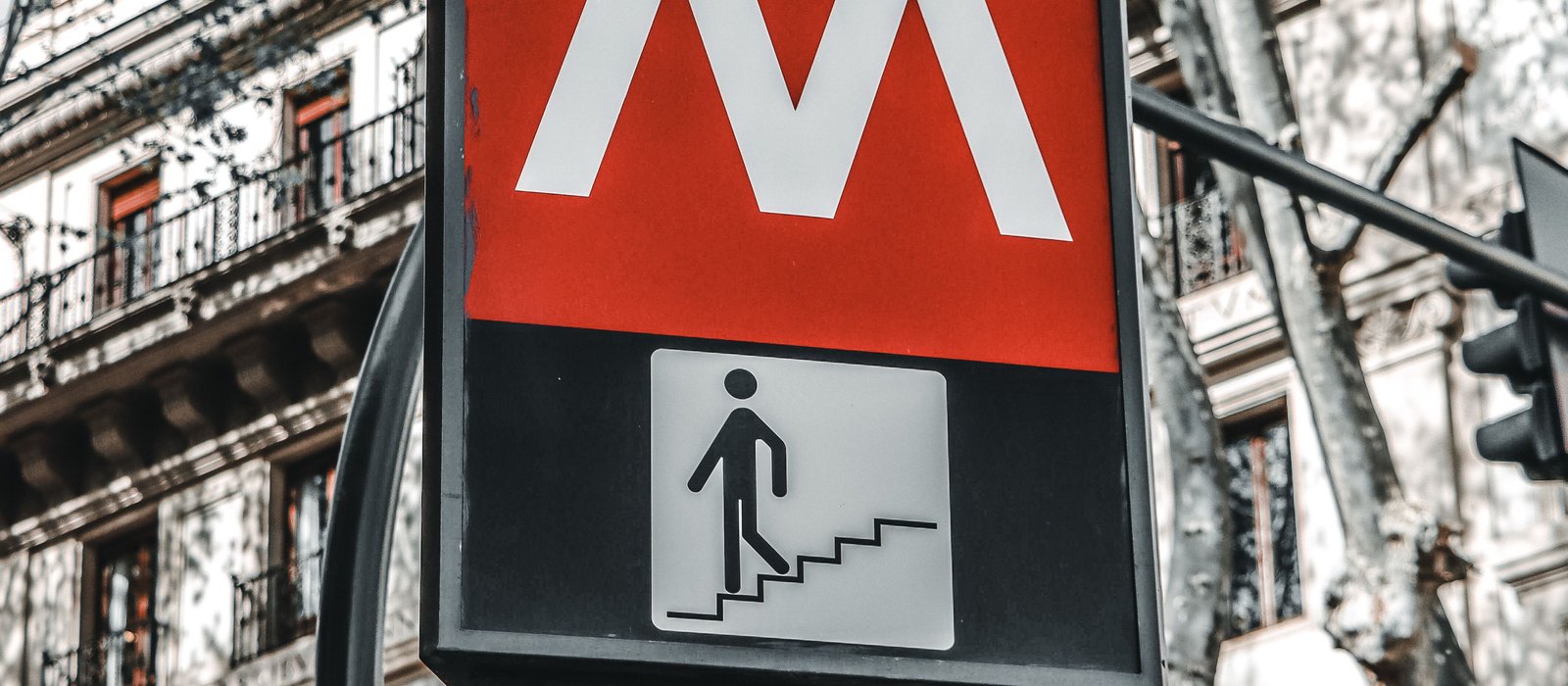
Rome's metro is small by big-city standards — just three lines — and it deliberately skirts much of the historic center (you can't tunnel freely under millennia of ruins). But for certain key journeys it's the fastest, cheapest way across town, and it's genuinely easy to use once you know the three lines and a couple of rules. A recent extension even brought the metro closer to the heart of ancient Rome. Here's the metro made simple: the lines, the tickets, and how to ride like you know what you're doing.
The three lines
Rome's metro has three lines, color-coded and easy to learn:
- Line A (orange) — the most useful for tourists. Stops at Spagna (Spanish Steps), Ottaviano (a short walk to the Vatican / St. Peter's), Termini (central station), San Giovanni, and Repubblica. Runs northwest–southeast.
- Line B (blue) — the ancient-Rome line. Stops at Colosseo (Colosseum and Roman Forum), Circo Massimo (Circus Maximus), Cavour (Monti), and Piramide (Testaccio/Ostiense, and the connection to trains for Ostia and the beach). Runs northeast–south.
- Line C (green) — the newest line. As of late 2025 it now reaches Colosseo, where it connects to Line B — a recent and welcome extension bringing it into the center. Beyond that it heads out to the eastern suburbs (useful if you're staying that way, e.g. Pigneto/San Giovanni). Further extension toward Piazza Venezia is under construction but years off.
Lines A and B cross at Termini, the central hub; Lines B and C now meet at Colosseo, and A and C meet at San Giovanni. That's the whole network — far simpler than London or Paris.
What the metro is (and isn't) good for
- Great for: quick hops to the Vatican (Ottaviano on A), the Colosseum (Colosseo on B), the Spanish Steps (Spagna on A), getting to/from Termini, and reaching outer neighborhoods fast.
- Not great for: the dense historic center (Pantheon, Navona, Trevi, Campo de' Fiori) — there are no metro stops there, so you walk (it's compact anyway — see our walking guide). The metro's coverage of the centro is limited by all the archaeology underfoot.
So think of the metro as a fast connector between a handful of key points, with walking filling in the heart of the city.
Key journeys, spelled out
To make the metro concrete, here are the journeys visitors actually make most: - To the Vatican: Line A to Ottaviano (then a 5-minute walk to St. Peter's) or Cipro (handy for the Vatican Museums entrance). - To the Colosseum: Line B (or now Line C) to Colosseo — the station exits right across from the Colosseum. - To the Spanish Steps: Line A to Spagna — the station lets out at the foot of the steps. - To Termini (central station): Line A or B — they both serve it, the one hub they share. - Vatican ↔ Colosseum (a classic tourist hop): from Ottaviano (A) ride to Termini, change to Line B, and continue to Colosseo — about 25–30 minutes including the change, versus a long walk or a traffic-bound bus. - To Testaccio/Ostiense or the Ostia/beach trains: Line B to Piramide.
For the dense center (Pantheon, Navona, Trevi, Campo de' Fiori) there's no nearby station — get off at the closest point (Spagna or Barberini on A, or Colosseo on B) and walk in, or just walk from wherever you are, since it's all close.