The Spanish Steps are one of Rome's most famous sights — a grand sweep of 135 travertine steps rising from an elegant piazza to a hilltop church, immortalized by Audrey Hepburn in Roman Holiday and surrounded by Rome's glossiest shopping streets. But there's one rule that trips up nearly every visitor, and a cluster of worthwhile sights around the steps that most people miss. This guide covers what to see, the no-sitting rule you must know, and how to turn a quick photo stop into a rewarding little walk through one of Rome's most elegant quarters.
The one rule: you can't sit on the steps
Let's get this out of the way first, because it's the thing visitors get wrong: sitting on the Spanish Steps is banned, and the rule is strictly enforced. Since 2019, to protect the restored monument, you cannot sit, eat, or drink on the steps — whistle-blowing officers patrol the area continuously and issue fines that can run into the hundreds of euros (more for any damage); check current local rules for exact amounts. Tempting as it is to rest on those iconic steps with a gelato, don't — you'll be moved on quickly or fined. You can walk up and down them freely; you just can't linger seated. (Bonus: the ban also keeps the area clearer for the photos everyone comes for.)
What you're looking at
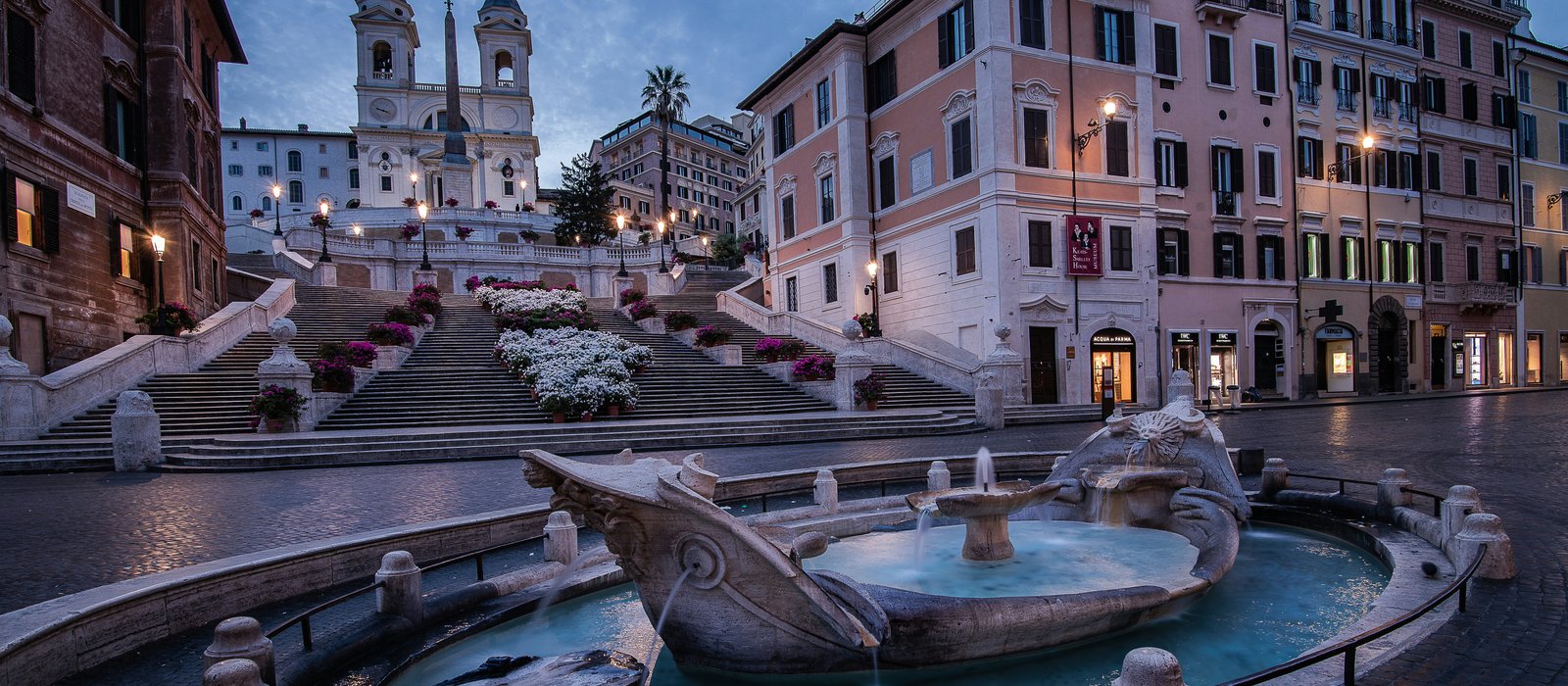
The steps themselves are a Baroque masterpiece, but the whole ensemble is the draw:
- The Spanish Steps (Scalinata di Trinità dei Monti) — 135 steps built 1723–1725, designed by Francesco de Sanctis, sweeping up in a theatrical series of curves and terraces. Free, open 24 hours.
- Trinità dei Monti — the twin-towered French church crowning the top, worth the climb for the panoramic view over Rome's rooftops and a look inside.
- Piazza di Spagna — the elegant square at the base, named for the long-ago Spanish Embassy to the Holy See.
- Fontana della Barcaccia — the charming "ugly boat" fountain at the foot of the steps, a half-sunken stone boat designed by the Bernini family (Pietro, father of the famous Gian Lorenzo), commemorating a historic Tiber flood.
The hidden gem: the Keats-Shelley House
To the right at the base of the steps (Piazza di Spagna 26) is the Keats-Shelley House, a small, deeply moving museum in the apartment where the English Romantic poet John Keats died of tuberculosis in 1821, aged just 25. Inside are his death mask, letters, first editions, and the tiny bedroom with a view of the steps he gazed at in his final months, plus memorabilia of Shelley, Byron, and the Romantic circle. It's a modest paid museum (check current hours/price) that takes 30–45 minutes and offers a poignant counterpoint to the bustle outside — a favorite of literature lovers and an easy, rewarding add.
A bit of history and fame
The steps have a richer backstory than their fame as a photo spot suggests. They were built in the 1720s to solve a practical and diplomatic problem: linking the French-owned church of Trinità dei Monti at the top with the Spanish-associated square below (the Spanish Embassy to the Holy See sat on Piazza di Spagna — hence the "Spanish" name, even though a French king's money helped fund the stairs). The result was one of the most theatrical pieces of urban design in Europe, a stage-set of curves and terraces that has drawn visitors for three centuries. In the 18th and 19th centuries the area became the heart of Rome's bohemian and Grand Tour scene — artists, models, and writers gathered here, which is exactly why Keats came to live (and die) beside the steps, and why the Caffè Greco on Via Condotti hosted the likes of Goethe, Byron, and Casanova. In the 20th century, Audrey Hepburn eating gelato on the steps in Roman Holiday (1953) sealed their global fame — ironically, the very kind of sitting-and-snacking that's now banned. Knowing all this, the steps become less a backdrop and more a layered monument to Rome's centuries as a magnet for artists and travelers.
A little walk around the area
The Spanish Steps sit in one of Rome's most elegant districts, made for a short stroll:
- Start at the Barcaccia fountain and Piazza di Spagna.
- Browse Via Condotti, the luxury shopping street leading west from the square — Bulgari, Prada, Valentino, and Rome's grandest boutiques (window-shopping is free and fun), plus the historic Caffè Greco, one of Rome's oldest cafés.
- Climb the steps (don't sit!) to Trinità dei Monti for the rooftop view.
- Continue to the Pincio Terrace and Villa Borghese — just past the church, a 10-minute walk leads to the Pincian Hill's panoramic terrace over Piazza del Popolo and into Rome's great central park.
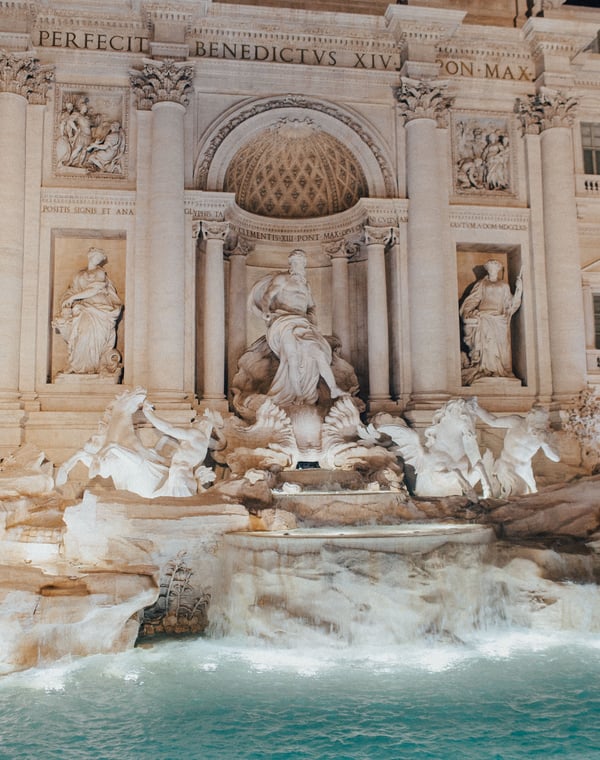
- Walk down toward the Trevi Fountain — it's a short, pleasant walk south, easily combined.
This turns the steps from a five-minute photo stop into a lovely hour or two through elegant Rome.
When to go
- Early morning or late evening for the fewest crowds and the best light — the steps get packed midday.
- Spring (roughly April–May) is special: the steps are decorated with banks of pink azaleas, one of Rome's loveliest seasonal sights.
- December brings a nativity scene and festive atmosphere.
Practical tips
- Don't sit on the steps — worth repeating; walk and stand, but don't rest seated.
- Mind the rose scam — the "free" rose and friendship-bracelet hustles are prolific here; don't accept anything handed to you (see our scams guide).
- Metro: Spagna station (Line A) is right at the steps — one of the easiest sights to reach by metro.
- Watch your belongings in the crowds, as anywhere busy in Rome.
- It's free — only the Keats-Shelley House and the climb's optional church visit involve any cost.
The bottom line
The Spanish Steps are a free, iconic, 24-hour sight — just remember the firm no-sitting rule (fines apply, and patrols enforce it). Beyond the 135 steps themselves, the ensemble rewards a short walk: the Barcaccia fountain at the base, Trinità dei Monti and its rooftop view at the top, the moving Keats-Shelley House to the side, Via Condotti's luxury windows, and the Pincio terrace just beyond. Go early or late (or in azalea season), keep an eye out for the rose scam, and let the steps anchor a stroll through one of Rome's most elegant quarters.
Keep planning
Not sure how it all fits together?
Pick your trip length and we'll route a real day-by-day plan.
Build your trip →