Rome's two main tourist passes — the Roma Pass and the Omnia Card — promise to save you money and time, and the marketing makes them sound like obvious buys. The honest answer is more nuanced: they're worth it for the right traveler with the right itinerary, and a waste for everyone else. The only way to know which you are is to understand exactly what each includes and run the math against your actual plan. This guide does the first part and shows you how to do the second. (Prices change periodically, so confirm current figures before buying — but the logic below doesn't change.)
What each pass actually is
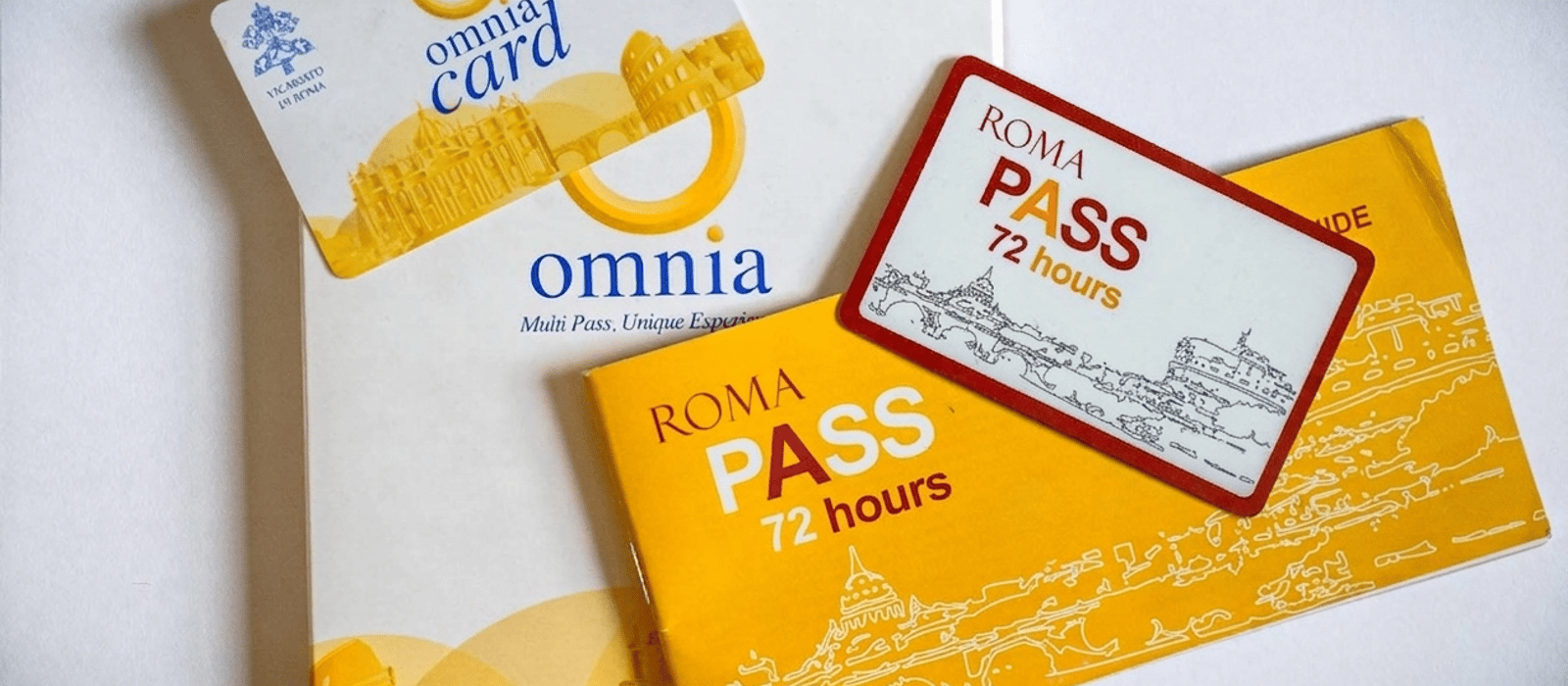
The Roma Pass
A city pass sold in 48-hour and 72-hour versions. It includes: - Unlimited public transport for the period (metro, bus, tram). - Free entry to one (48h) or two (72h) participating attractions. - Discounted entry to many others, plus skip-the-ticket-line at some sites.
It covers many big hitters — the Colosseum/Forum/Palatine, Castel Sant'Angelo, the Capitoline Museums, the National Roman Museum and more. The crucial limit: it does not include the Vatican (Vatican City is a separate state). It's the cheaper of the two passes.
The Omnia Card (Vatican & Rome Card)
A 72-hour-only pass that bundles the Roma Pass itself plus the Vatican piece the Roma Pass lacks. It includes: - Everything in the 72h Roma Pass (transport + 2 free attractions + discounts), plus - Vatican Museums & Sistine Chapel entry, - St. Peter's Basilica fast-track with an audio guide, and - A hop-on-hop-off bus tour.
It's considerably more expensive than the Roma Pass, and it only comes in the 72-hour length — so it's no good for a two-day trip.
The honest verdict
Neither pass is a guaranteed saving. Here's the real-world read:
The Roma Pass is worth it if you'll (a) visit at least two of the paid attractions it covers — realistically the Colosseum/Forum plus one or two more — and (b) use public transport meaningfully. For a sightseeing-heavy two-to-three days centered on ancient Rome, it can come out ahead, and the line-skipping and not-fiddling-with-transport-tickets convenience is a real bonus on top of any money saved.
The Omnia Card is worth it if you're a first-timer doing a classic 3-day blitz with both the Colosseum and the Vatican at the top of your list, and you'll use the transport and the bus tour. Its value proposition is squarely the Vatican inclusion the Roma Pass lacks. But it's expensive, and plenty of travelers find they can't actually "use up" its value in three days — it's frequently criticized as poor value for slower or more selective visitors.
Neither is worth it if you travel slowly and on foot, see only one or two big sights, or want specific guided tours and exact time slots (which you'd book directly anyway). For many independent travelers, buying individual timed tickets + tapping a contactless card for transport is simpler and cheaper.
How to actually decide (the 5-minute math)
Don't buy on vibes — do this:
- List the attractions you'll genuinely visit (be honest — not the optimistic everything-list).
- Look up each one's current individual ticket price and add them up.
- Estimate your transport — if you're mostly walking, it's near zero; if you're criss-crossing, it adds up.
- Compare that total to the current pass price. If the pass costs less than your real-world total (or close, with the convenience worth the small difference), buy it. If not, don't.
- Check the duration fits — the Omnia is 72h only; a 2-day trip rules it out.
Two adjustments to the math: passes save time, not just money (skip-the-ticket-line and grab-any-bus convenience has real value on a short trip), and the first-Sunday free museum days can undercut a pass's value if your trip overlaps one.