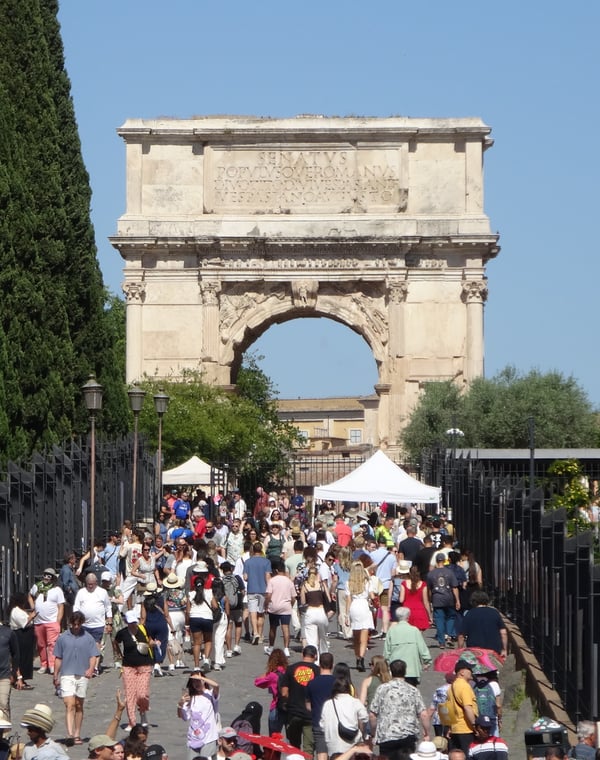
Short answer: yes, Rome is safe — reassuringly so. Millions of tourists visit every year and the overwhelming majority have a wonderful, completely incident-free trip. Violent crime against visitors is rare, and by the standards of major cities Rome is comparable to or safer than many. But there's one real, persistent nuisance worth understanding and preparing for: pickpocketing. This honest guide separates the genuine risks from the overblown fears, tells you exactly where and how petty theft happens, and gives you the simple habits that drop your risk to almost nothing — so you can relax and enjoy the Eternal City.
The honest threat picture
Let's be clear and proportionate about what is and isn't a concern in Rome:
- Violent crime against tourists: rare. Rome is not a city where visitors face meaningful danger of assault or worse. By crime index, Rome rates as safer than Paris or Barcelona. This is a fundamentally safe city.
- Pickpocketing and petty theft: the real risk. This is the one genuine, common issue — opportunistic, non-violent, and highly concentrated in predictable places. It's a nuisance that can ruin a day (and your wallet), not a threat to your safety.
- Scams: present but avoidable. Tourist-targeted hustles (fake petitions, "free" bracelets, the map-over-your-phone trick) — annoying, easily sidestepped (see our scams guide).
- Terrorism / natural disasters: no greater concern than any major city. Not something to organize your trip around.
In short: Rome is safe; guard your valuables against pickpockets, and you've handled 95% of the actual risk.
Where pickpocketing happens (the hotspots)
The good news about Rome's pickpockets is how predictable they are. Theft concentrates in a small number of crowded, distraction-rich places:
- Metro Line A — especially the tourist-corridor stretch (around Termini, Barberini, Spagna, Ottaviano). Line A is the single biggest hotspot, particularly during crowded boarding. (Line B is noticeably quieter.)
- Crowded buses — the 64 and 40 (the "Vatican express" routes through the center) are notorious.
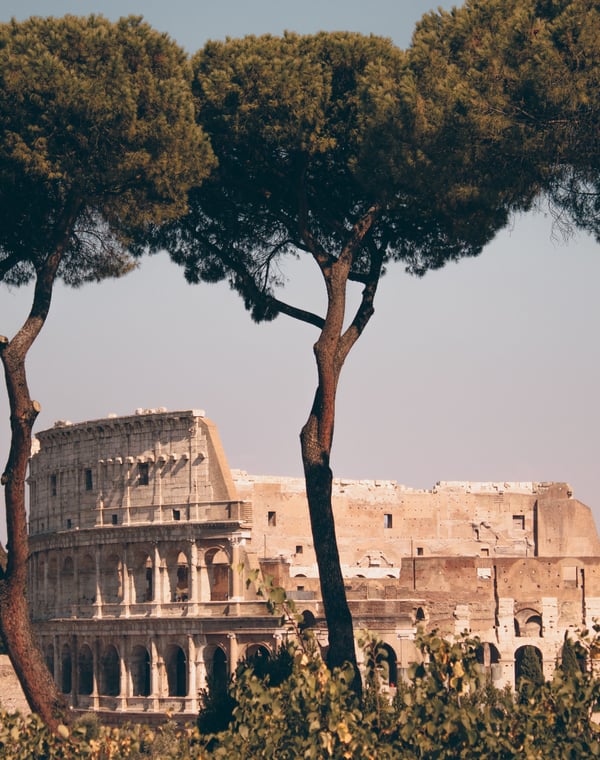
- The Colosseum area — crowds plus the fake-"gladiator" photo hustlers.
- The Trevi Fountain — dense crowds jostling for photos.
- The Vatican entrance queues — long, packed, distracted lines.
- Termini station and its immediate surroundings — the transport hub, busiest and least comfortable, especially late at night.
- Any dense tourist crush — wherever people are packed together and focused on a sight or a phone.
Notice the pattern: these aren't dangerous places, they're crowded ones. Pickpockets need crowds and distraction; remove those and the risk plummets.
How pickpockets operate
Knowing the playbook makes you a hard target:
- They work in teams — one distracts (asks directions, "drops" something, bumps you, thrusts a map or petition at you), another lifts your wallet or dips your bag while you're focused on the first.
- They target the distracted — people staring up at a monument, checking a phone map, boarding a packed metro, taking a photo.
- They go for easy access — open bags, back pockets, loose outer pockets, phones on café tables.
- They avoid confrontation — they're quick and quiet, and gone before you notice.
The simple habits that protect you
Defeating pickpockets isn't about paranoia — it's about a few easy habits:
- Carry your bag in front of your body, zipped, in crowds (cross-body, swung to the front on the metro and busy buses).
- No wallet in a back pocket — front pocket, money belt, or interior zipped pocket for valuables and passport.
- Don't flash cash, jewelry, or an expensive camera — blend in.
- Stay alert at the hotspots — heighten awareness on Line A, the 64/40, in the sight-crowds, and during metro boarding (when most thefts happen).
- Be wary of "distractions" — someone bumping you, dropping something, thrusting a map/petition/bracelet at you: that's often the setup. Keep a hand on your bag and move on.
- Keep phones off café tables and out of easy reach.
- Carry copies of documents, leave the passport in the hotel safe when you can, and know your card-cancellation numbers.
- Use a cross-body anti-theft bag if you want extra peace of mind.
Do these, and your practical risk drops close to zero.
If something does happen
Even careful travelers occasionally get unlucky, so know the steps — they make a bad moment manageable:
- If you're pickpocketed: stay calm; the thief is long gone and chasing isn't worth it. Cancel your cards immediately (have the numbers saved separately), and file a police report (denuncia) at the nearest station — you'll need it for insurance and for replacing a passport. Rome's police handle these routinely.
- If your passport is taken: report it to the police, then contact the US Embassy in Rome for an emergency replacement.
- Keep backups: photos/copies of your passport and cards stored in your phone and email mean a theft is an inconvenience, not a catastrophe.
- Travel insurance: worth having; it covers theft of belongings and smooths the replacement process — keep your policy details accessible.
- Emergency numbers: the EU-wide emergency number is 112 (police/ambulance/fire); it works throughout Italy and connects to English-speaking operators.
The point isn't to dwell on the worst case — it's that even if the one real risk materializes, it's a recoverable hassle, not a danger. Prepared, you can shrug it off and get back to enjoying Rome.
Neighborhoods: safe to stay and walk
Rome's tourist areas are broadly safe, day and night:
- The historic center (Pantheon, Navona, Trevi), Trastevere, Monti, Prati, and the main visitor neighborhoods are lively, well-policed, and fine to walk in the evening — Trastevere and the centro are bustling and well-lit late.
- Termini's immediate surroundings are the least comfortable central area, especially after dark — not dangerous, but gritty; normal awareness applies (see our Termini guide).
- Far-flung peripheral suburbs (the kind tourists have no reason to visit) have rougher reputations — irrelevant to a normal trip.
For where to base yourself, see our where-to-stay guides; the popular neighborhoods are all safe choices.
Solo travelers, women, and families
- Solo and women travelers generally find Rome comfortable and manageable, with the same pickpocket-awareness applying; normal big-city precautions at night (well-lit, populated streets; confident navigation) serve well.
- Families are very safe; the main concern with kids is keeping track of belongings in crowds (see our family guides).
- Tap water is excellent and safe — drink from the nasoni fountains freely.
The bottom line
Rome is a safe city, and the fear around it is largely overstated: violent crime against tourists is rare, and the historic center is well-policed and fine to walk day and night. The one real risk is pickpocketing — but it's opportunistic, non-violent, and remarkably predictable, concentrated on Metro Line A, crowded buses (64/40), the Colosseum, Trevi, the Vatican queues, and around Termini. Carry your bag in front and zipped, keep valuables out of back pockets, stay alert in the crowds, and don't fall for the distraction setups — and you'll almost certainly join the millions who visit Rome every year without a single problem. Be aware, not afraid: Rome is there to be enjoyed.
Keep planning
Not sure how it all fits together?
Pick your trip length and we'll route a real day-by-day plan.
Build your trip →