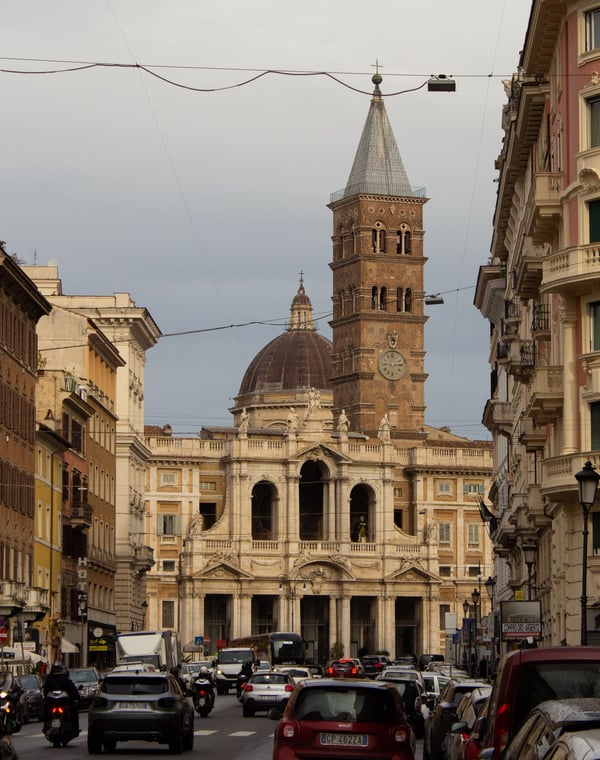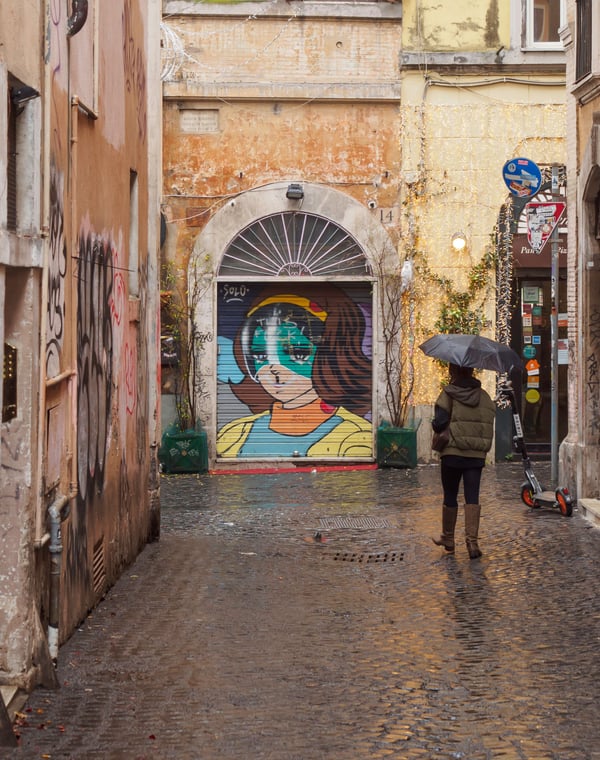
The Centro Storico — Rome's historic center — is the dense, walkable heart of the city where the greatest concentration of "wow" sits within a few minutes of itself: the Pantheon, Piazza Navona, the Trevi Fountain, and a tangle of baroque churches, fountains, and piazzas in between. This is the Rome most first-timers picture, and the joy of it is that you don't need a plan — you can step out the door and stumble onto a 2,000-year-old temple, a Bernini fountain, and the perfect espresso bar within one block. Here's how to make the most of Rome's most magical square mile on foot.
What the Centro Storico is
The historic center is the warren of streets in the bend of the Tiber, roughly between the river and the Via del Corso, that grew up over the medieval and Renaissance city laid atop ancient Rome. It's not a single sight but a dense web of them — and the spaces between, the narrow cobbled lanes and sunlit piazzas, are as much the attraction as the monuments. It's compact, almost entirely walkable, and best experienced by wandering rather than marching a checklist. It's also the most central (and priciest) place to stay, precisely because everything's on your doorstep.
The essential sights
A handful of must-sees anchor any visit, all within a short walk of each other:
- The Pantheon — the best-preserved building of ancient Rome, its dome and oculus an unmissable marvel (now a paid, timed-entry visit — see our Pantheon guide).
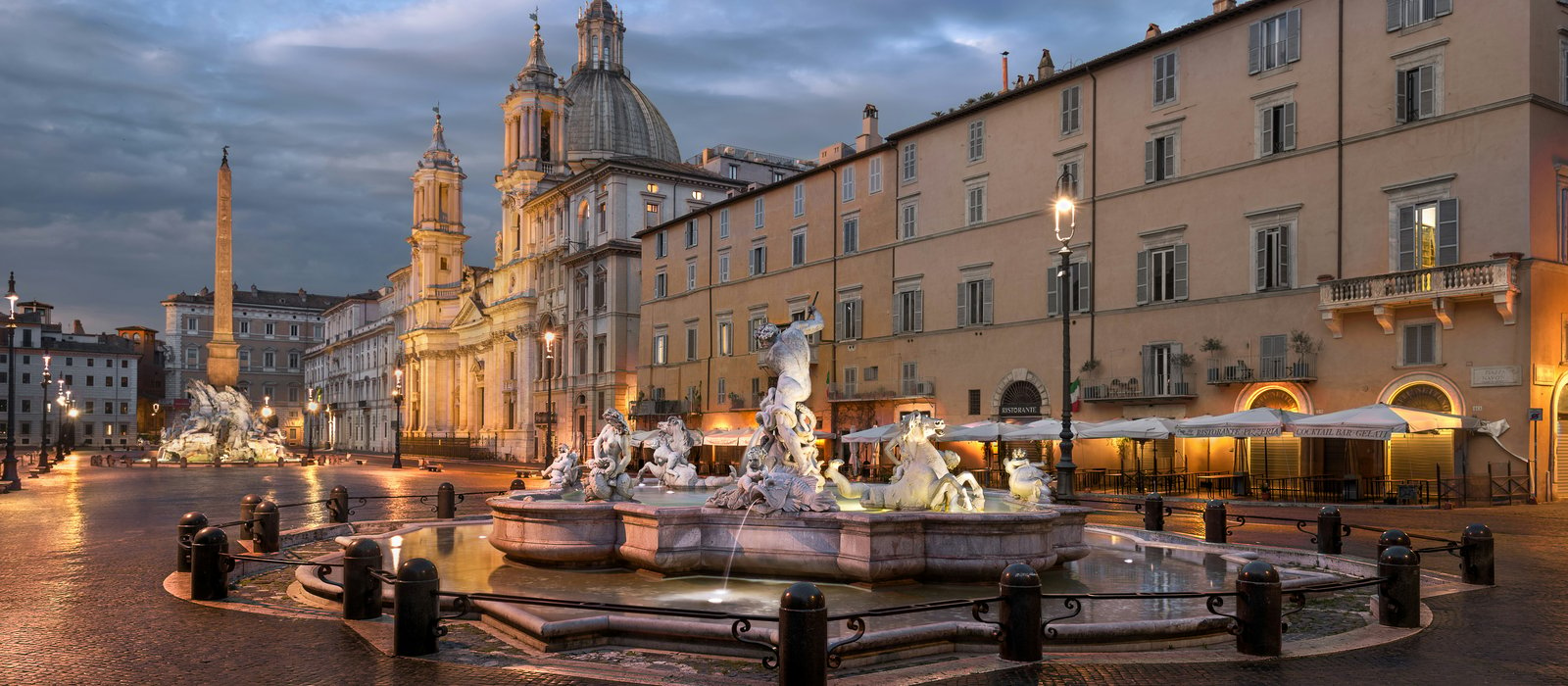
- Piazza Navona — the great baroque square built on an ancient stadium, with Bernini's spectacular Fountain of the Four Rivers at its center.
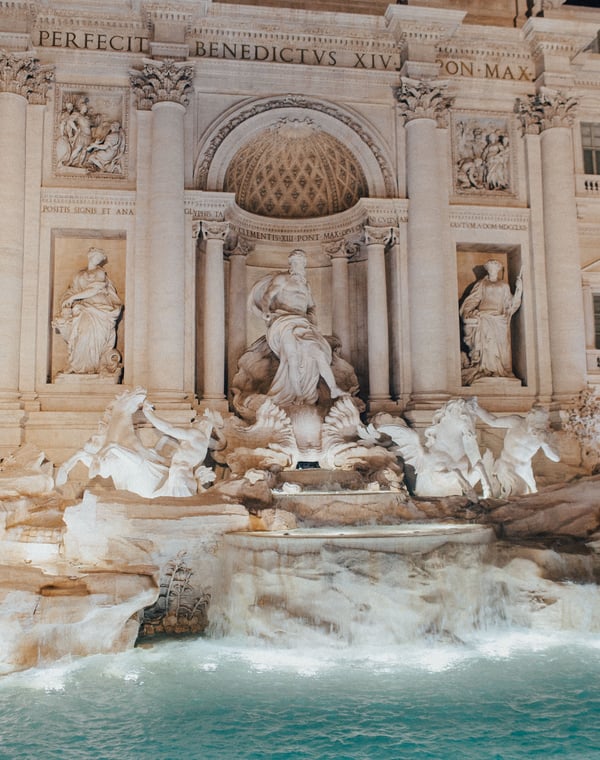
- The Trevi Fountain — Rome's grandest fountain, where you toss a coin to ensure your return (crowded at any hour; go early or late).
- The Spanish Steps — the monumental staircase and the elegant shopping streets around it (covered in our dedicated guide).
- Campo de' Fiori — the market square by day, lively by night (see our guide).
- The churches — Rome's centro is full of extraordinary, free churches holding Caravaggios and Bernini sculptures (San Luigi dei Francesi for its Caravaggios, Sant'Ignazio for its trompe-l'œil ceiling, the Gesù, and more).
The layers beneath your feet
Part of what makes wandering the Centro Storico so rewarding is realizing you're walking on top of three thousand years of city. The street plan itself tells the story: Piazza Navona's distinctive elongated oval is the exact footprint of the ancient Stadium of Domitian, a Roman athletics arena the medieval city built directly over — which is why the square is shaped like a racetrack. Streets curve where ancient buildings once stood; churches sit atop pagan temples; and fragments of antiquity are casually embedded in walls and corners everywhere you look. The centro wasn't planned so much as it accumulated — ancient, medieval, Renaissance, and baroque Rome layered and tangled together over the centuries. Knowing this turns an aimless wander into a kind of time travel: that odd bend in the lane, that column built into a palazzo wall, that church floor a few steps below street level — each is a seam between eras. You don't need to study it to enjoy it, but a little awareness of the layers makes the magic of the in-between streets click into place.