Choosing the right neighborhood is the most consequential booking decision you'll make for Rome — more than the specific hotel. Get it right and the city feels effortless, with dinner and the major sights a stroll away; get it wrong and you'll spend your evenings commuting. This is a side-by-side comparison of the neighborhoods first-timers actually weigh, what each is best at, the honest trade-offs, and a quick decision guide so you can match an area to your trip. (For a deeper "where should a first-timer sleep" walkthrough, see our first-visit stay guide; this piece is the at-a-glance comparison.)
The quick verdict
- Want to walk everywhere? → Centro Storico (historic center).
- Central and characterful for less? → Monti.
- Atmosphere and the best food? → Trastevere.
- Calm, elegant, Vatican-focused? → Prati.
- Cheapest and most connected? → Around Termini.
Everything below is the detail behind that.
Centro Storico (the historic center)
Best for: first-timers who want to walk to everything and will pay for the privilege.
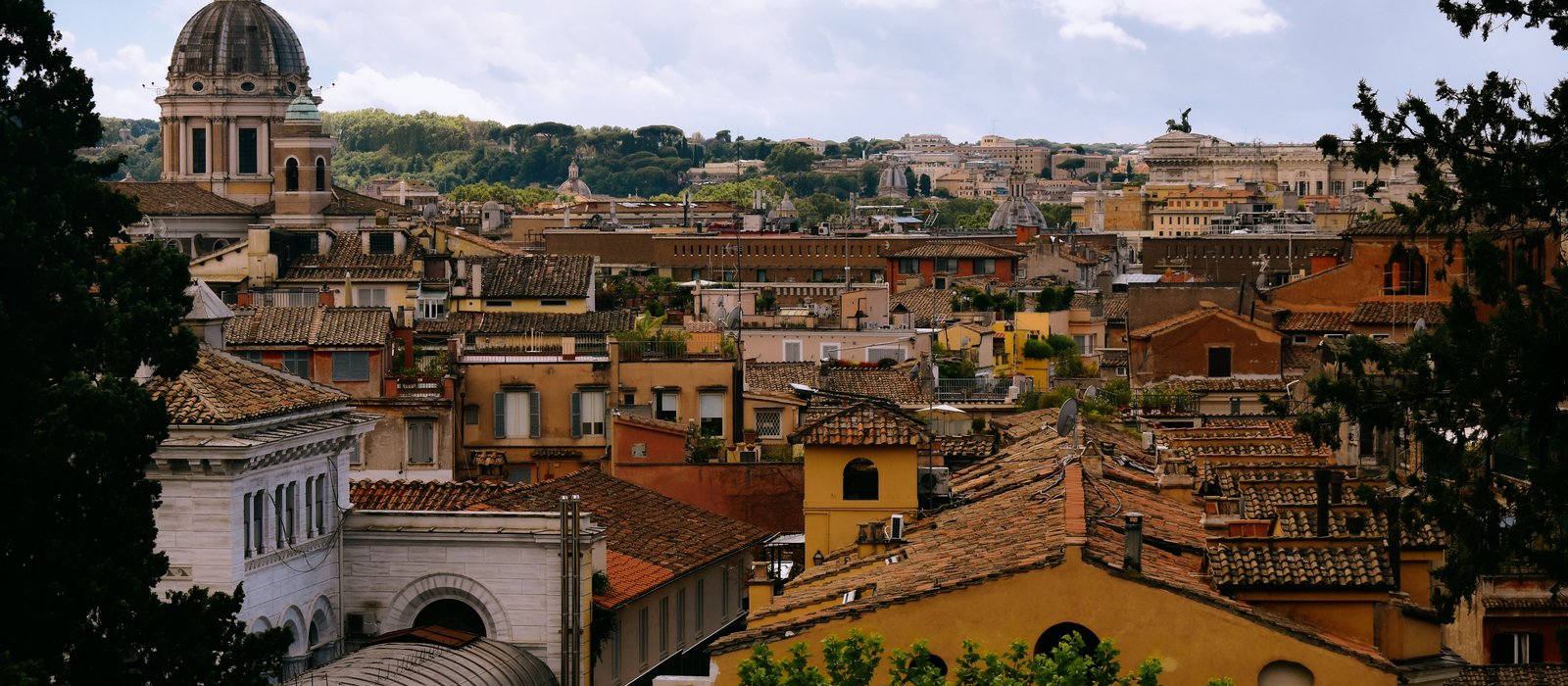
The postcard Rome — step out the door near the Pantheon, Piazza Navona, and the Trevi Fountain, rarely needing transport. It's the most atmospheric base and the most convenient for the classic sights.
Trade-offs: the priciest area; rooms tend to be small; the most central streets can be noisy at night. You're paying for location, and on a short first trip it's usually worth it.
Monti
Best for: travelers who want a real-neighborhood feel and a lower price, steps from ancient Rome.
Tucked between the Colosseum and Termini, Monti is a genuinely local-feeling quarter of wine bars, boutiques, and narrow lanes — central enough to walk to the Forum, with more personality and better value than the tourist core.
Trade-offs: lively in the evenings (ask about the room's position if you're a light sleeper); small and popular, so the best places book up.
Trastevere
Best for: travelers who prioritize ambiance and food over proximity to the ancient sights.
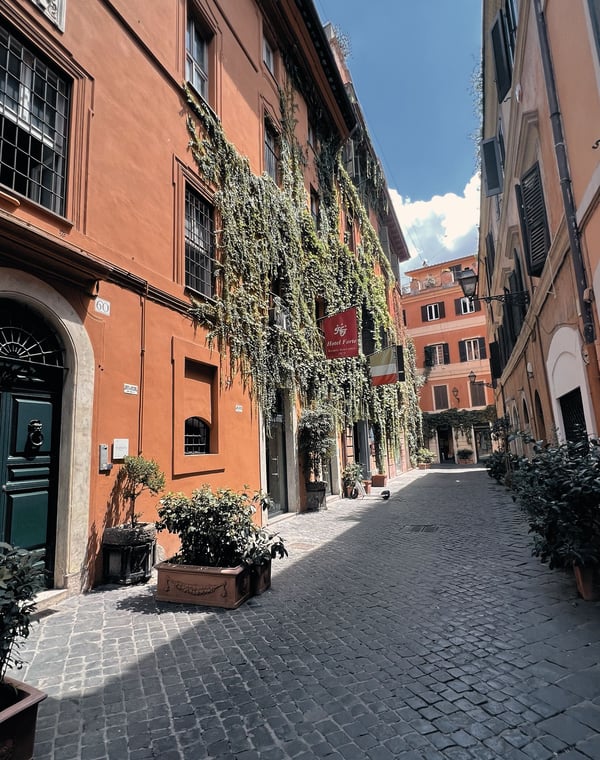
The cobbled, ivy-draped quarter across the Tiber is the Rome people fall in love with, and the city's standout neighborhood for a classic dinner. Roll out of bed into the most charming evening scene in the city.
Trade-offs: nightlife-lively (read: noisy on weekends); a 20-minute walk or short tram to the Colosseum/Forum cluster; the main squares are touristy even if the side streets aren't.
Prati
Best for: travelers who want calm, elegant streets and easy Vatican access.
North of the river near the Vatican, Prati is an upscale, orderly residential district of wide boulevards and good restaurants — quieter than the center and ideal if the Vatican tops your list or the historic core feels too hectic.
Trade-offs: a bit removed from ancient Rome, so you'll use the Metro or longer walks to reach the Colosseum side; less "old Rome" character than the center or Trastevere.
Around Termini
Best for: budget travelers, very short stays, and anyone arriving/leaving by train.
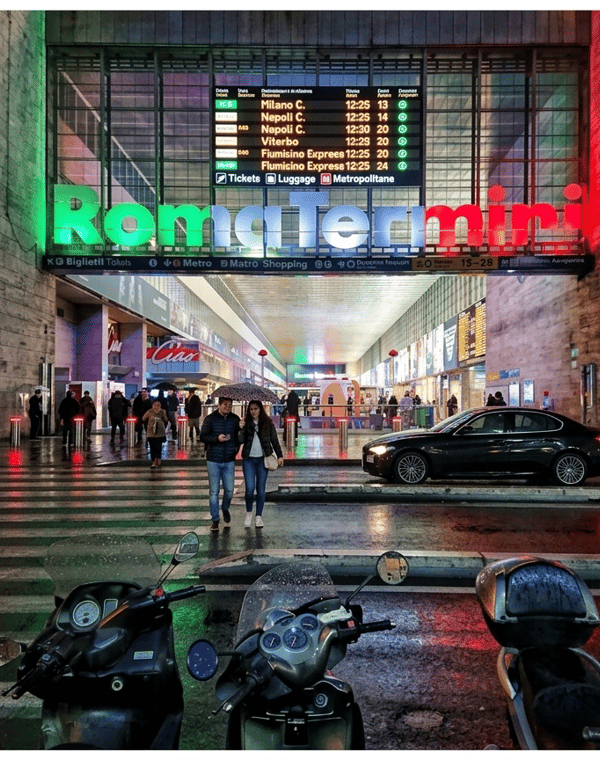
The area around the main station is the value-and-convenience choice: the city's cheapest rooms, on top of the Metro hub and the airport trains.
Trade-offs: the least charm of these options; parts feel more functional than romantic, and it's a pickpocket hotspot, so stay alert around the station. Fine for a night or a tight budget; not where you'd spend a week for atmosphere.
The one big axis: Colosseum side vs. Vatican side
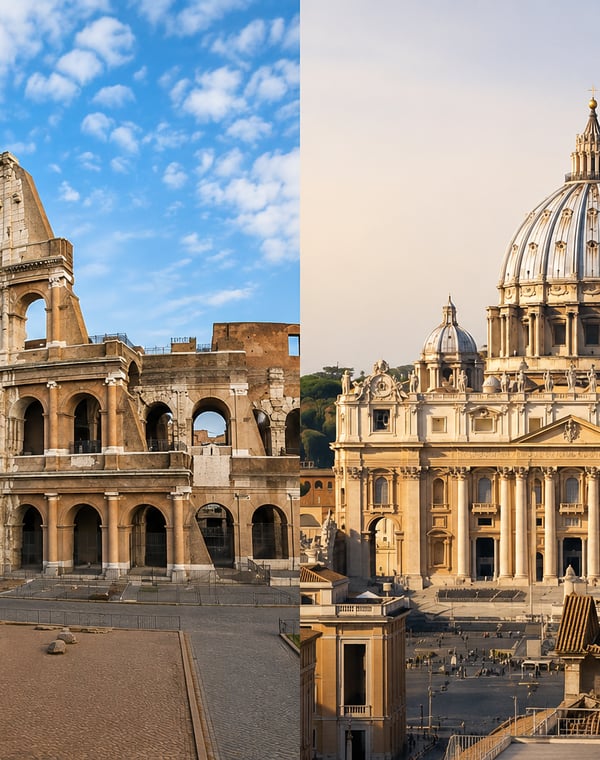
If you boil the whole decision down, it's which half of the center you anchor to. The Colosseum side (Monti, eastern Centro Storico) puts ancient Rome on your doorstep; the Vatican side (Prati) puts St. Peter's and the museums close and keeps you calmer. First-timers who want to walk to the most sights generally do better anchored toward the center/Colosseum side, treating the Vatican as a planned half-day rather than a doorstep.
Comparison at a glance
- Most walkable to sights: Centro Storico > Monti > Trastevere > Prati > Termini
- Best value: Termini > Monti > Trastevere > Prati > Centro Storico
- Best atmosphere: Trastevere ≈ Centro Storico > Monti > Prati > Termini
- Quietest: Prati > (parts of) Centro Storico > Monti ≈ Trastevere (noisy) ≈ Termini
- Best food scene at your door: Trastevere > Monti > Centro Storico > Termini ≈ Prati
A note on safety by neighborhood
All five of these areas are safe for visitors — Rome's risk is petty theft, not danger, and it tracks crowds and transit rather than neighborhoods. That said, a few practical distinctions: the immediate Termini station area is the one most worth staying alert in (it's a pickpocket and tout hotspot, and some blocks feel more functional than welcoming, especially late). Trastevere is lively and very safe but genuinely loud on weekend nights. Prati and much of the Centro Storico are calm and polished. None of this should drive you away from a good-value room near Termini — just choose a well-reviewed property, mind your bag around the station, and you'll be fine. The bigger "safety" factor for most travelers is simply noise and sleep, which is why the courtyard-room tip matters more than any crime concern.
Booking tips that apply anywhere
- Prioritize location over room size. In Rome's core, a small room you walk out of into a piazza beats a big one a transit ride away.
- Check the actual walking distance, not just the neighborhood label — "central" covers a lot of ground.
- Ask about noise in Monti and Trastevere; request a courtyard-facing or upper-floor room.
- Budget for the city tourist tax, a small per-night charge collected at most accommodations.
- Book early for spring and fall; the best-located small properties go first.
The bottom line
There's no single best neighborhood — there's the best one for your priorities. Centro Storico to walk everywhere, Monti for character-and-value near the ancient core, Trastevere for atmosphere and food, Prati for calm and the Vatican, Termini for budget and transit. Anchor toward the center for a first visit, weigh charm against price, and prioritize location over square footage — and Rome will feel like it's yours from the moment you drop your bags.
Keep planning
Not sure how it all fits together?
Pick your trip length and we'll route a real day-by-day plan.
Build your trip →