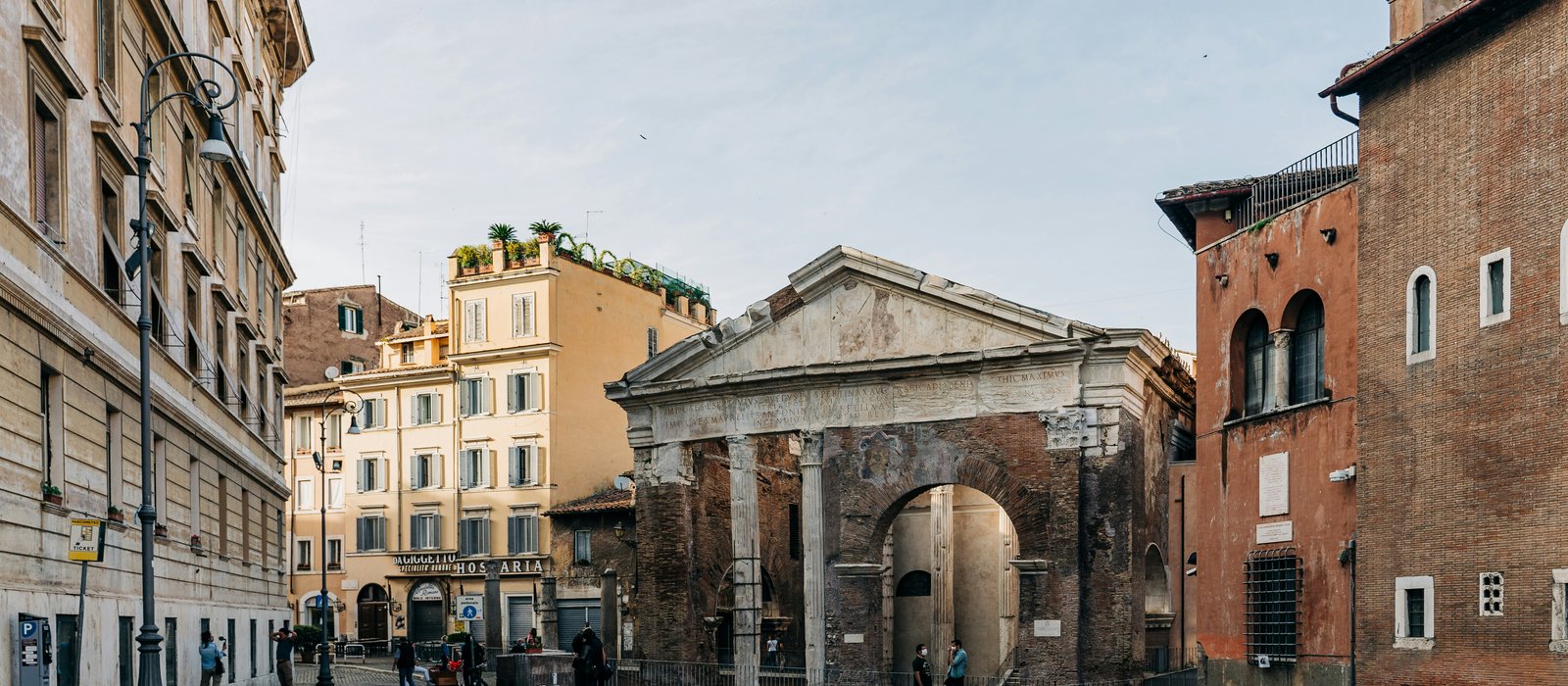
Tucked between the Tiber, Campo de' Fiori, and Piazza Venezia, Rome's Jewish Quarter — historically the Ghetto — is one of the city's most atmospheric and moving neighborhoods, and one of its best for food. Home to one of the oldest Jewish communities in the world, with roots going back to ancient Roman times, it layers two thousand years of history into a few compact streets: ancient ruins, a centuries-old story of resilience, a grand synagogue, and a distinctive Roman-Jewish cuisine you can't taste anywhere else. It's often overlooked by visitors, which is exactly why you should go. Here's a guide to its history, its food, and a walking route through it.
A note on names and history
First, a word on terminology: the area is traditionally called the "Ghetto" because of its history, but many today prefer "Jewish Quarter" out of respect — we use both, mindful of what the word carries.
The history is profound. Rome's Jewish community is among the oldest in the world, dating to the 2nd century BC — older than the Christian city around it. In 1555, Pope Paul IV ordered the creation of the Ghetto, confining the Jewish population to this small walled area under harsh restrictions for over three centuries. The walls finally came down in 1888, after Italian unification brought emancipation. The 20th century brought tragedy again under fascism and the Nazi occupation — small brass plaques (pietre d'inciampo / "stumbling stones") set in the pavement mark the homes of Jews deported to the death camps, a quiet, powerful memorial underfoot. Today the quarter is a living, vibrant community: kosher restaurants, bakeries, Jewish-owned shops, and a deep sense of continuity and resilience.
What to see
The quarter packs a lot into a small area:
- The Great Synagogue (Tempio Maggiore) — built 1901–1904 after the Ghetto's walls fell, its distinctive squared dome is a neighborhood landmark. Inside is grand Art Nouveau decoration.
- The Jewish Museum of Rome — housed beneath the synagogue, it preserves centuries of the community's history through manuscripts, textiles, ritual silver, and personal stories. (Synagogue visits are typically via the museum, often by guided tour — check current arrangements and security.)
- The Portico d'Ottavia — the dramatic ancient Roman portico (originally dedicated by Augustus to his sister Octavia), which became a medieval fish market and now stands as the atmospheric gateway to the quarter.
- The Teatro di Marcello (Theatre of Marcellus) — an ancient theatre that looks strikingly like a small Colosseum, with Renaissance apartments built atop its arches; floodlit and beautiful at night.
- The Turtle Fountain (Fontana delle Tartarughe) — a delicate, much-loved Renaissance fountain on a quiet nearby piazza.
The food: Roman-Jewish cuisine
This is one of the quarter's great pleasures — a distinctive cuisine found nowhere else, blending Roman cooking with kosher tradition over centuries:
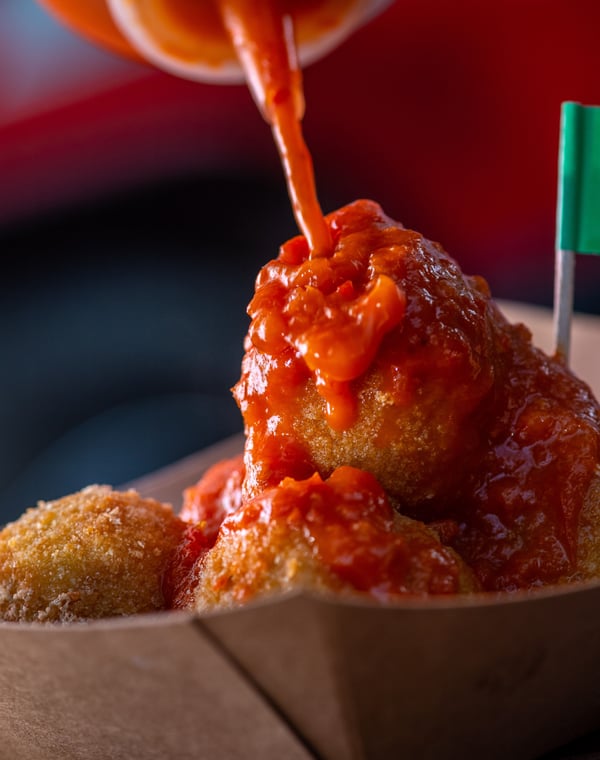
- Carciofi alla giudia — the icon: whole artichokes deep-fried until the leaves crisp open like a golden flower. A must, especially in artichoke season (roughly winter into spring).
- Carciofi alla romana — the braised Roman-style artichoke, the gentler counterpart.
- Filetti di baccalà — battered, fried salt-cod fillets.
- Roman-Jewish sweets — the historic Boccione bakery is famous for its dense ricotta-and-cherry tart and almond cookies.
- The trattorias along Via del Portico d'Ottavia — the quarter's restaurant row, where family-run kitchens (some over a century old) serve the classics. Atmospheric, especially in the evening.