Traveling to Rome with kids changes the accommodation calculus entirely: suddenly you care about space, a kitchen, laundry, quiet nights, a residential neighborhood, and easy transport more than about being steps from a famous fountain. The good news is Rome has excellent family options — you just need to prioritize differently. This guide covers what makes a stay genuinely family-friendly in Rome, whether to choose a hotel or apartment, the best neighborhoods for families, and the practical details that make or break a trip with children.
What families actually need in Rome
The features that matter most with kids:
- Space — a family room, suite, or apartment beats a cramped double; everyone sleeps better with room to spread out.
- A kitchen (or kitchenette) — for breakfasts, snacks, picky eaters, baby/toddler food, and the odd in-night meal; a huge money-saver and sanity-saver.
- Laundry — washing machine access (more common in apartments) is gold on a longer family trip.
- A residential, calm neighborhood — quieter nights and a local feel beat a noisy tourist-strip.
- An elevator — non-negotiable with a stroller, luggage, and tired kids; many historic buildings lack one, so check.
- Easy transport — near a metro stop or simple connections, to minimize meltdown-inducing long walks.
- Air conditioning — essential in the hot months (confirm it; not universal in older buildings).
Hotel vs. apartment for families
Both work; the choice depends on your family:
Apartments / vacation rentals are often the better fit for families, especially for longer stays or younger kids:
- More space, a kitchen, often a washing machine, and a local, residential setting — like a temporary home.
- Better value for four-plus people than two hotel rooms.
- Trade-offs: no daily housekeeping, variable amenities, self-check-in logistics, and you must book a legitimate, registered rental (look for a displayed CIN code — Italy now requires it, and non-compliant listings are being removed; see our apartment-vs-hotel guide).
Hotels suit families who want service and ease:
- Family rooms or connecting rooms, daily housekeeping, breakfast included, a front desk for help, and reliable standards.
- Look specifically for hotels advertising family rooms / triples / quads (doubles won't fit a family).
- Trade-offs: less space, no kitchen, pricier for larger families.
Best neighborhoods for families
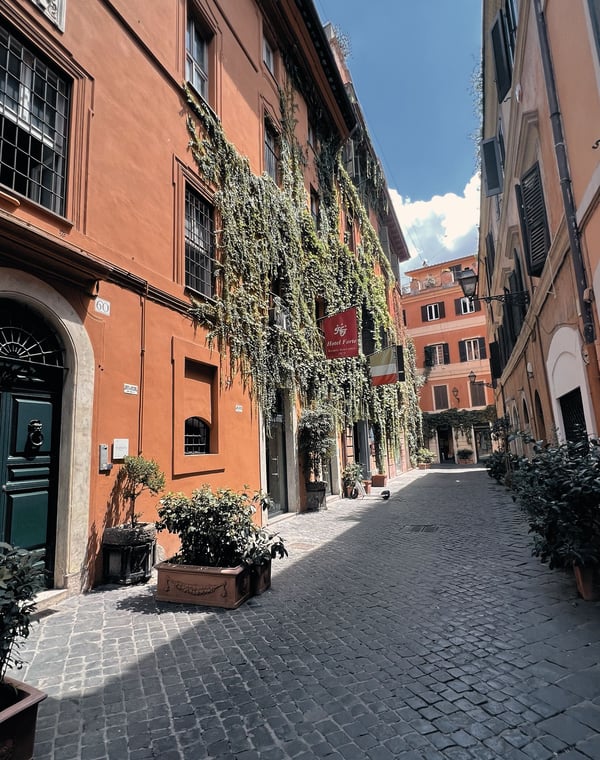
Prioritize calm, residential, and well-connected over maximally central:
- Prati (near the Vatican) — elegant, residential, safe-feeling, great food, walkable to St. Peter's, good metro; one of the top family picks (calm nights, local feel).
- Monti — characterful but central, walkable to ancient sights, with a neighborhood feel — good for families who want atmosphere with convenience (just pick a quieter street).
- The Aventine / near the Circus Maximus — leafy, calm, residential, with green space for kids to run, yet close to the ancient sights.
- Borgo (right by the Vatican) — convenient for an early St. Peter's visit, quieter evenings.
- Quieter parts of Trastevere (the western/southern lanes) — atmosphere with a more residential feel, if you avoid the noisy nightlife core.
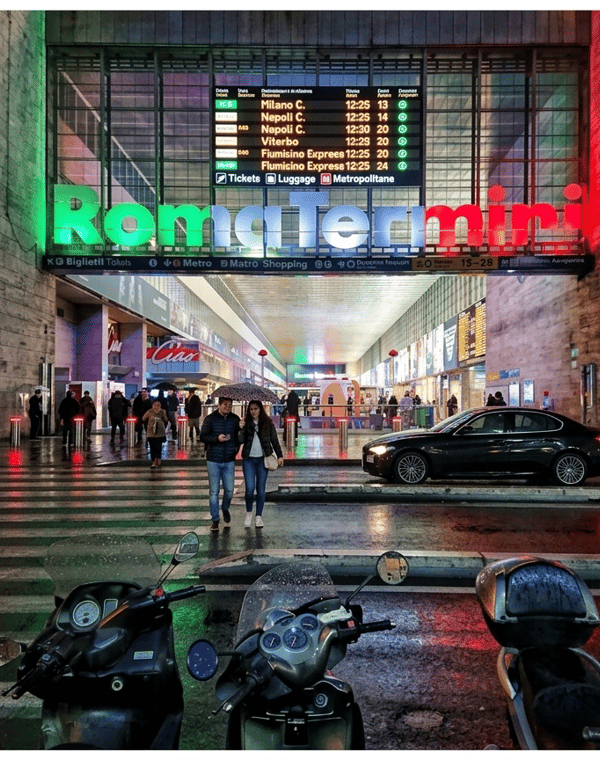
Generally avoid basing right on the loudest nightlife strips (the heart of Campo de' Fiori or central Trastevere) or the grittier immediate Termini surroundings with young kids.
How your base shapes a family day
The right base does more than house you — it sets the rhythm of a family day in Rome, which with kids is everything. A kitchen means relaxed breakfasts in pajamas before heading out (no wrangling tired children into a restaurant first thing) and the option of a simple in-apartment dinner on nights when everyone's wiped out — a genuine sanity-saver that hotels rarely offer. A residential neighborhood means a nearby park or piazza where kids can run off energy, a local gelateria, and a grocery store for snacks and supplies — the unglamorous essentials that make a trip manageable. Proximity to a metro stop or tram is worth more with kids than with adults: it converts a meltdown-inducing 30-minute hot walk into a quick ride, letting you do a morning of sights and retreat to base for a midday rest before heading out again (the rest is key — Rome with kids works far better as two shorter outings than one death march). And being in a calm area means the children actually sleep, which determines whether tomorrow is fun or fraught. The pattern that works: base somewhere residential and well-connected, sightsee in focused morning and late-afternoon bursts with a rest at "home" in between, and lean on the kitchen for the meals that are hardest with kids. The base enables that rhythm — or fights it.
Practical tips for family stays
- Confirm the elevator — with a stroller and luggage, stairs in a 16th-century walk-up are brutal.
- Confirm air conditioning in summer — and that it works in all rooms.
- Choose a kitchen for younger kids and picky eaters — it transforms the trip.
- Pick a residential, quieter street for sleep.
- Stay near a metro stop to cut down on long, hot walks with tired children.
- Look for connecting/family rooms if hoteling — don't assume a "family" listing fits four.
- Check for a crib/cot (culla) if you have a baby — request in advance.
- Verify apartment legitimacy (CIN code) and check-in logistics (with the lockbox crackdown, confirm how you'll actually get in — see our apartment-vs-hotel guide).
- Location over luxury — a calm, well-connected, spacious base beats a fancy central one with kids.
The bottom line
Family-friendly Rome is about prioritizing space, a kitchen, calm nights, an elevator, AC, and easy transport over being steps from a sight. Apartments often win for families (space, kitchen, laundry, value — just book a legitimate CIN-registered one), while hotels with family rooms suit those wanting service and ease. Base in a calm, residential, well-connected neighborhood — Prati, the Aventine, Monti, or quieter Trastevere — rather than a noisy tourist strip. Nail those practicalities, and Rome is a wonderful, manageable city to explore with kids.
Keep planning
Not sure how it all fits together?
Pick your trip length and we'll route a real day-by-day plan.
Build your trip →