Two neighborhoods sit at the heart of Rome's food scene, just across the river from each other, and between them they offer the city's best eating: Trastevere, the cobbled, atmospheric quarter where dinner rolls into a magical evening, and Testaccio, the working-class neighborhood that's the actual birthplace heartland of Roman cuisine. Knowing how to eat in each — and how to dodge the tourist traps that have crept into Trastevere — sets you up for some of the best meals of your trip. Here's the guide to both.
Testaccio: the real Roman food neighborhood
If you want to eat the truest Roman food, Testaccio is the place (see our Testaccio guide for the full picture). Built around the old slaughterhouse, it's the heartland of cucina romana — the four classic pastas and the bold "fifth quarter" offal tradition — and it's largely off the tourist trail, so quality and authenticity run high.
What to seek out in Testaccio:
- The Testaccio Market (Mercato di Testaccio) — a modern covered market that's a street-food paradise: the famous trapizzino (a pizza-pocket stuffed with classic Roman braises) was born here, plus supplì, pizza al taglio, and fresh everything. Perfect for a casual, delicious, cheap lunch.
- The classic trattorias — Testaccio's old-school restaurants do the four pastas (cacio e pepe, carbonara, amatriciana, gricia) and traditional dishes with no compromise; this is where Romans go for the real thing.
- The "fifth quarter" / offal dishes — for the adventurous, Testaccio is the place to try coda alla vaccinara (oxtail), trippa (tripe), and other organ-meat classics, done as well as anywhere.
- Pizza and street food — casual Roman staples abound.
Testaccio is best for a food-focused outing — a market lunch, a proper trattoria dinner, or a food tour — rather than sights; come hungry and a little adventurous.
Trastevere: atmospheric dining (done right)
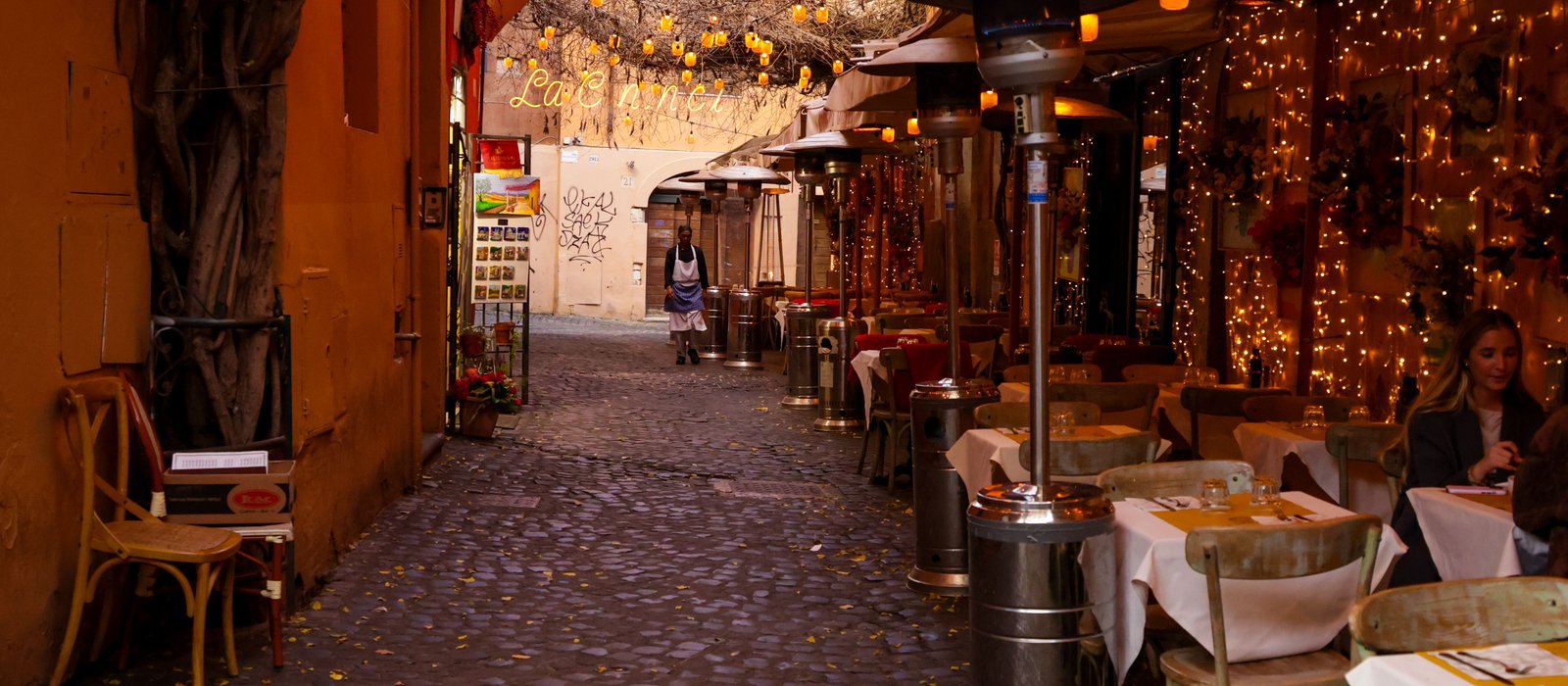
Trastevere is the most romantic place in Rome to eat — cobbled lanes, ivy-draped façades, candlelit tables, and an evening that glows. But its popularity is also its trap: the restaurants right on the main squares (around Piazza di Santa Maria) are the most touristy and the weakest value. The secret is simple — eat off the main drag.
How to eat well in Trastevere:
- Get off the main piazza. A few streets west and south of Piazza di Santa Maria in Trastevere, quality jumps and prices drop. The quieter lanes hide the genuine trattorias.
- Look for the Roman classics done simply — the four pastas, saltimbocca, artichokes, fried starters (fritti — supplì, baccalà, fried artichokes).
- Reserve — the good places fill up, especially on weekend evenings.
- Mix trattoria and wine bar — Trastevere is great for both a full dinner and a casual wine-and-snacks evening.
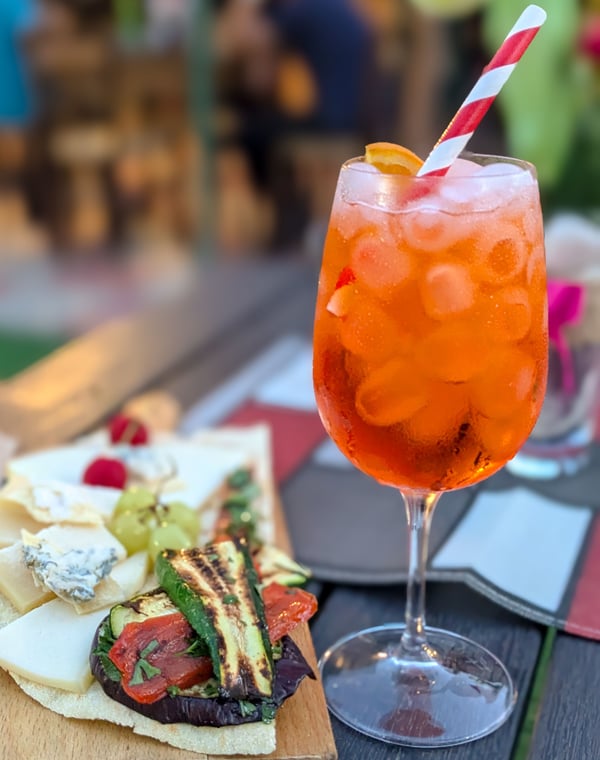
- Roll it into the evening — aperitivo, then dinner, then a wander through the lamplit lanes (see our Trastevere After Dark guide).
Trastevere is best for an atmospheric dinner-into-evening; just choose the side streets, not the show-front restaurants on the busy square.
What to order in each
To eat well, know what to order — both neighborhoods excel at cucina romana, the city's robust, simple, time-honored cooking:
The four classic pastas (order these anywhere good in either neighborhood):
- Cacio e pepe — pecorino cheese and black pepper, deceptively simple, gloriously creamy when done right.
- Carbonara — egg, pecorino, guanciale (cured pork cheek), and pepper — no cream, ever.
- Amatriciana — guanciale, tomato, pecorino, a little chili.
- Gricia — the "white amatriciana": guanciale and pecorino, no tomato.
Roman starters and mains:
- Fritti (fried starters) — supplì (fried rice-and-mozzarella balls), fried artichokes, fiori di zucca (stuffed fried zucchini flowers), baccalà (fried salt cod).
- Carciofi — artichokes, alla romana (braised) or alla giudia (Jewish-style fried, especially in the Ghetto).
- Saltimbocca alla romana — veal with prosciutto and sage.
- Abbacchio — Roman-style lamb.
The Testaccio specialty (for the adventurous):
- The "fifth quarter" offal dishes — coda alla vaccinara (oxtail), trippa alla romana (tripe), rigatoni con la pajata — Testaccio is the place to try these done traditionally.
Order a couple of fritti to start, a Roman pasta, maybe a secondo to share, and a carafe of house wine — that's a perfect Roman meal in either neighborhood.
Trastevere vs. Testaccio: which for what
- For the best, most authentic Roman food and value: Testaccio.
- For atmosphere and a romantic evening: Trastevere (off the main square).
- For a casual market lunch / street food: Testaccio Market.
- For aperitivo-into-dinner with buzz: Trastevere.
- For a food tour: either is excellent — Testaccio for the cuisine's roots, Trastevere for the atmosphere.
Many visitors do both: a Testaccio food lunch one day, a Trastevere dinner another — together they cover the full range of Roman eating.
Practical tips for both
- Book ahead for popular trattorias, especially weekend evenings.
- Eat at Roman hours — lunch ~1–2 p.m., dinner from 8 p.m.; restaurants busy with locals at those times are a good sign.
- Watch for the tourist-trap tells in Trastevere (photo menus, hosts waving you in, prime-square spots) — see our tourist-trap guide.
- Carry some cash — small family trattorias sometimes prefer it (though cards are widely taken now).
- The coperto (cover charge) is normal, not a scam.
- Pace yourself — Roman meals are leisurely; lean into it.
The bottom line
Trastevere and Testaccio are Rome's two great eating neighborhoods, and the smart move is to use each for its strength: Testaccio for the most authentic Roman food and best value (the market for street-food lunch, old-school trattorias for the four pastas and offal classics), and Trastevere for an atmospheric, romantic dinner-into-evening — as long as you escape the touristy main square for the quieter side lanes. Book ahead, eat at Roman hours, dodge the photo-menu traps, and you'll have some of the best meals of your entire trip on these two sides of the river.
Keep planning
Not sure how it all fits together?
Pick your trip length and we'll route a real day-by-day plan.
Build your trip →