Gelato is one of Rome's great cheap pleasures — and also one of its most common tourist traps. The streets around the major sights are lined with shops selling brightly colored, fluffy mounds that look spectacular and taste like sweetened air. Real Roman gelato is a different thing entirely: dense, intensely flavored, made fresh in small batches. The good news is that telling them apart takes about ten seconds once you know the signs. Here's how to never waste a cone in Rome.
The tells: spotting real gelato vs. the tourist stuff
You can judge a gelateria from the display case before you order. Watch for these signals:
Bad signs (walk away)
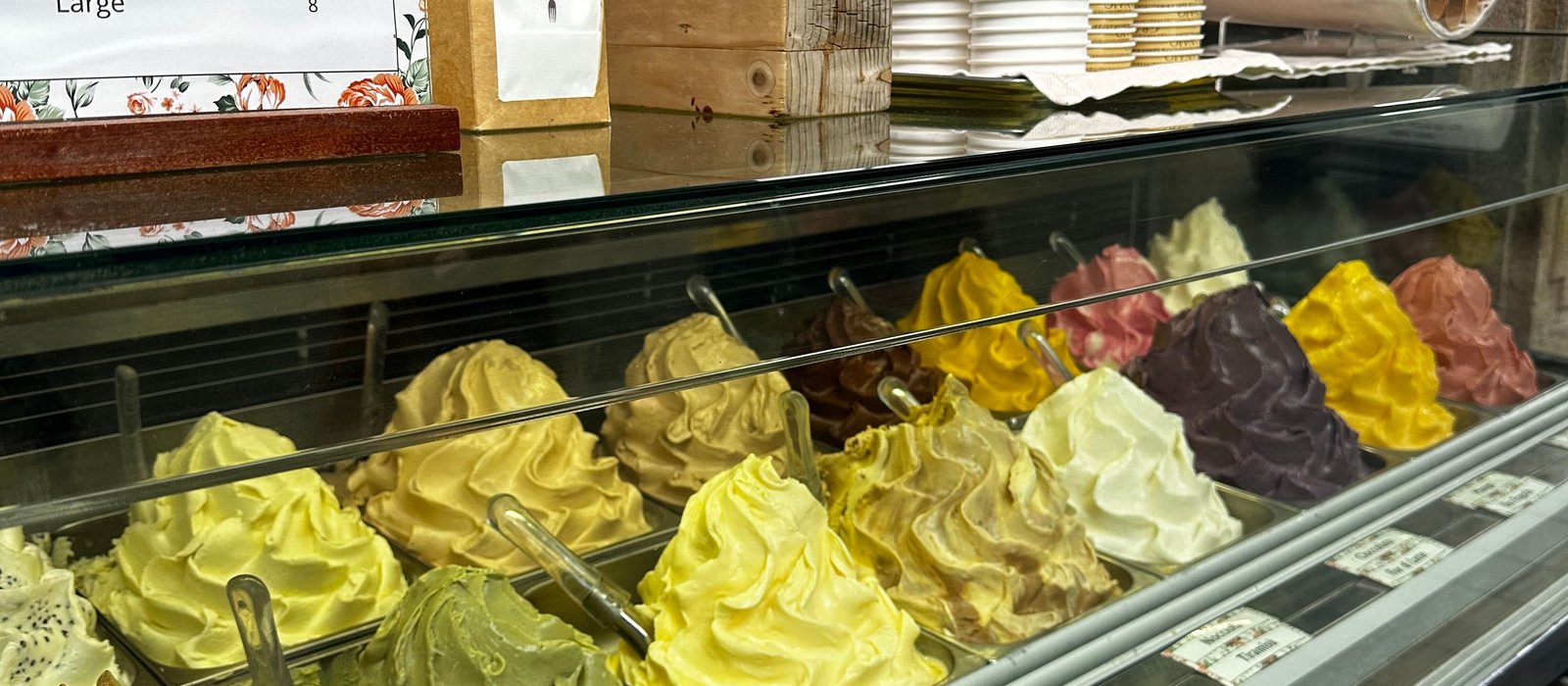
- Towering, fluffy mounds piled high above the tubs. Real gelato is denser and doesn't hold dramatic peaks; those fluffy mountains are pumped full of air and stabilizers.
- Neon, unnatural colors. Banana that's bright yellow (real banana gelato is grayish), mint that's electric green, "Puffo"/Smurf blue. Natural ingredients make muted colors.
- Every flavor mounded identically and garnished with matching fruit or candy on top — a styling trick, not a quality sign.
- Prime tourist location with a flashy display right outside a major sight. Not always bad, but a red flag worth the extra scrutiny.
Good signs (go in)
- Muted, natural colors and gelato kept in covered metal tubs (or stored below the counter line), which protects it and signals fresh, artisanal product.
- A short, seasonal flavor list. Real makers offer what's fresh, not 60 flavors year-round.
- "Produzione propria" or "artigianale" signage — made on the premises.
- Pistachio that's a dull olive-brown, not bright green — a quick, reliable test.
How to order like a local
- Coppetta or cono? Cup or cone — your choice; locals do both.
- You usually pick two or three flavors even on a small size, so mix.
- Panna (whipped cream) on top is a free, traditional add — say "con panna" if you want it.
- Pay first, then order at busier spots — look for the cashier (cassa) and bring the receipt to the counter.
- A small cup or cone is inexpensive. Prices vary by size and shop, so check the board, but gelato is meant to be an everyday treat, not a splurge.
Flavors worth trying
Beyond the familiar chocolate and stracciatella, look for the things Italian gelato does exceptionally:
- Pistacchio (from real Sicilian pistachios — that dull-green test applies).
- Nocciola (hazelnut) and gianduia (chocolate-hazelnut).
- Fruit sorbets in season — they should taste shockingly like the actual fruit.
- Crema / fior di latte — simple milk and egg-custard bases that, like cacio e pepe in the pasta world, reveal whether a maker is serious.
Gelato vs. ice cream — why it's different
It's worth understanding what makes gelato gelato, because it explains the quality signals above. Gelato has less butterfat than American ice cream (it's milk-forward rather than cream-heavy), is churned slower so it incorporates less air, and is served a touch warmer and softer. The result is denser, more intensely flavored, and silkier on the tongue. That's also why the fluffy, over-aerated mounds are a red flag: they've been whipped full of air and stabilizers to hold those peaks, which is the opposite of how good gelato is made. Real gelato is too dense to stand up in dramatic mountains — it sits relatively flat in its tub or below the counter.