Roma · Vaticano · Trastevere · Colosseo · Appia Antica
Rome for AmericansThe unhurried guide
Appia Antica: Rome's Ancient Road on Foot or Bike
Back to home

Appia Antica: Rome's Ancient Road on Foot or Bike

EditorialJune 10, 2026

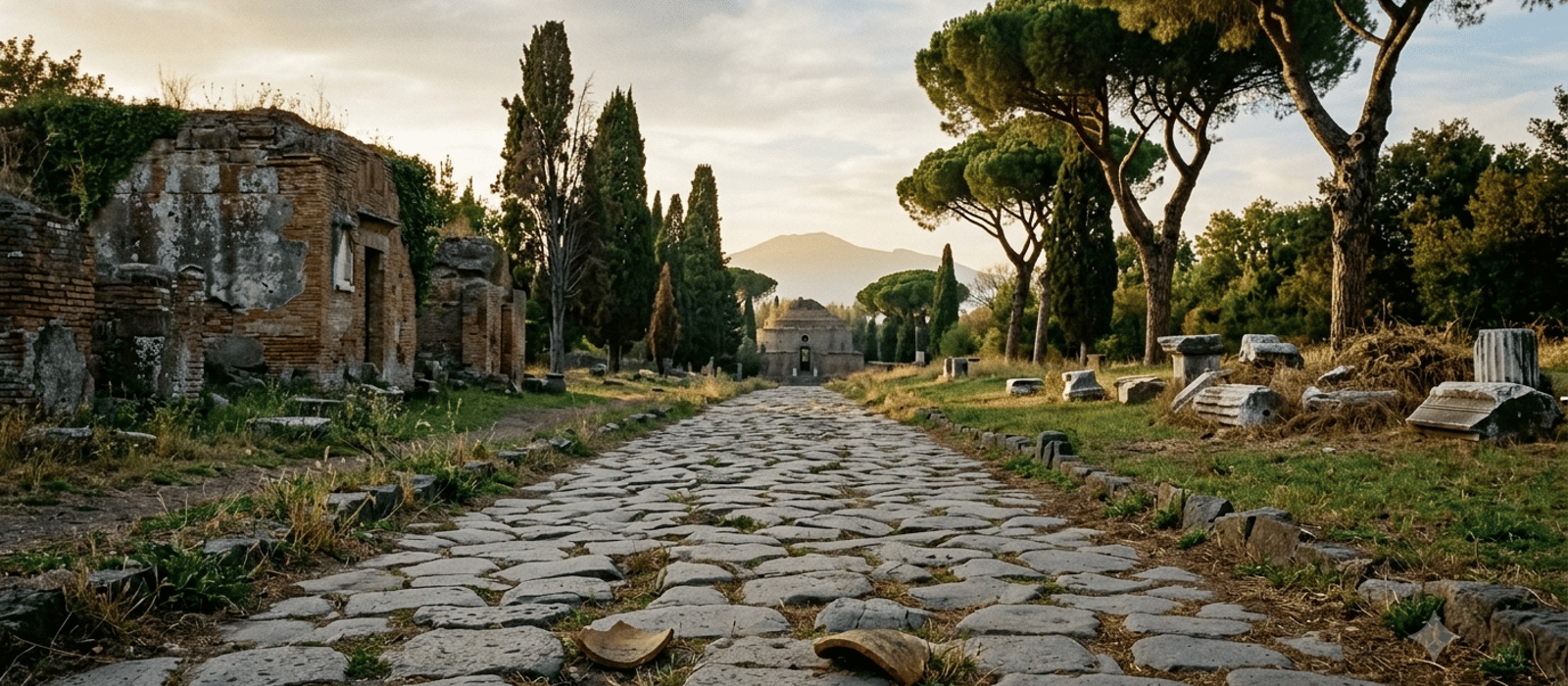
A few kilometers from the Colosseum, the crowds vanish and ancient Rome opens up in a way no museum can match: the Via Appia Antica, the "Queen of Roads," begun in 312 BC, still paved in places with the original basalt stones that Roman legions, traders, and funeral processions traveled. Walk or cycle it and you pass tombs, ruined villas, aqueducts, and catacombs, with sheep grazing in the fields and umbrella pines overhead. It's the best half-day escape in Rome — green, atmospheric, and gloriously uncrowded. Here's how to do it.

What the Appian Way is

The Appia Antica was ancient Rome's most important road — the great highway south that linked the city to the ports of the southeast, wide enough for two-way traffic and engineered so well that long stretches survive two thousand years later. Because Roman law forbade burials inside the city, the wealthy lined the road out of town with elaborate tombs and mausoleums, turning it into a monumental avenue of the dead. Later, early Christians dug the catacombs in the soft rock beneath. Today the northern stretch nearest Rome is a protected regional park — part archaeological site, part countryside — that you explore on foot or by bike, mostly for free.

When to go: Sundays are special

The single best tip: go on a Sunday if you can. On Sundays the road is closed to car traffic, which transforms it from a place with some unpleasant trafficked stretches into a peaceful, walkable, cyclable ancient avenue. Any day rewards a visit, but Sunday is when the Appia is at its most magical. Whenever you go, morning or late afternoon avoids the midday heat (there's limited shade in the open stretches).

How to get there

It's close — about 3 km from the Colosseum — but the start of the road has traffic, so most people use public transport to reach the good parts:

  • Bus 118 runs from the Piazza Venezia / Circo Massimo area through the park toward Villa dei Quintili — convenient, and it runs Sundays.
  • Bus 218 from San Giovanni reaches the catacombs area.
  • Metro A to Colli Albani, then bus 660 gets you closest to the bike-rental point and the Appia Antica Café / visitor center.
  • Some hop-on-hop-off and Archeobus services also serve the area.

Don't simply walk out from the Colosseum along the first stretch — it's trafficked and dull; ride or bus to the traffic-limited section beyond the Cecilia Metella area where the real atmosphere begins.

On foot or by bike?

Both work; it depends on how much you want to cover:

  • On foot is lovely for a focused few hours — walk a stretch, see the tombs and a catacomb, picnic in a grassy spot. You won't cover the whole road, but you don't need to.
  • By bike lets you see far more — the tombs, Villa dei Quintili, the aqueduct park beyond. Bikes rent on-site at the visitor center and the Appia Antica Café (city bikes, mountain bikes, and e-bikes). A key tip: the original basalt paving is bumpy and uneven, so a mountain bike or e-bike is far more comfortable than a city bike, and there's often a smoother dirt path alongside the worst stones.
The catacombs

Beneath the Appia lie several of Rome's great catacombs — vast underground early-Christian burial galleries. The main visitable ones are San Callisto, San Sebastiano, and (nearby) Domitilla. Practical points:

  • Entry is via guided tour (a modest fee), and it's cool underground — a welcome respite on a hot day.
  • Each closes one day a week (San Callisto on Wednesdays, San Sebastiano on Sundays, Domitilla on Tuesdays) and they typically close over lunchtime, so check the day and time before planning around one.
  • Dress code applies — covered shoulders and knees, as in any sacred site.
  • You generally pick one to visit rather than all; they're similar enough that one gives the experience.

A sample half-day on the Appia

To turn all this into a plan: take Bus 118 out (or Metro A to Colli Albani then bus 660 to the bike point), rent an e-bike or mountain bike at the visitor center or Appia Antica Café, and ride south away from the city where the road is quieter and smoother. Stop at the Mausoleum of Cecilia Metella, carry on past tombs and the Circus of Maxentius, and if you have the legs, push toward the Villa dei Quintili or the Park of the Aqueducts. Loop back, drop the bike, and pick one catacomb (San Callisto or San Sebastiano) for a cool underground finish — checking its closing day first. Pack a picnic and you've got a perfect, low-stress half-day that feels a world away from the city crowds. On a car-free Sunday, the same loop is pure pleasure; on a weekday, lean on the traffic-limited stretches and the parallel paths.

What else to see along the way

Beyond the tombs and catacombs, look for the Mausoleum of Cecilia Metella (a massive, iconic round tomb), the Villa dei Quintili (sprawling imperial villa ruins), the Circus of Maxentius (a remarkably intact ancient chariot track), and, a little further, the dramatic arches of the Park of the Aqueducts. The visitor center hands out maps with route suggestions ranging from short walks to longer rides.

Practical tips

  • Free to walk — the road and park cost nothing; you pay only for bike rental and catacomb entry.
  • Bring water, sun protection, and a picnic — there are some cafés but long open stretches.
  • Wear sturdy shoes — uneven ancient paving.
  • Allow a half to full day depending on how far you go.
  • It's a refreshing change of pace — pair it with a slower day rather than cramming it between major monuments.

The bottom line

The Appia Antica is ancient Rome at its most atmospheric and least crowded — an ancient highway of tombs, villas, aqueducts, and catacombs that you walk or cycle through green countryside just minutes from the city. Go on a car-free Sunday if you can, take a bus or metro to the traffic-limited stretch, rent an e-bike or mountain bike for the bumpy basalt, pick one catacomb to explore, and give it a relaxed half-day. It's the side of Rome most visitors miss — and one of the best.

Keep reading